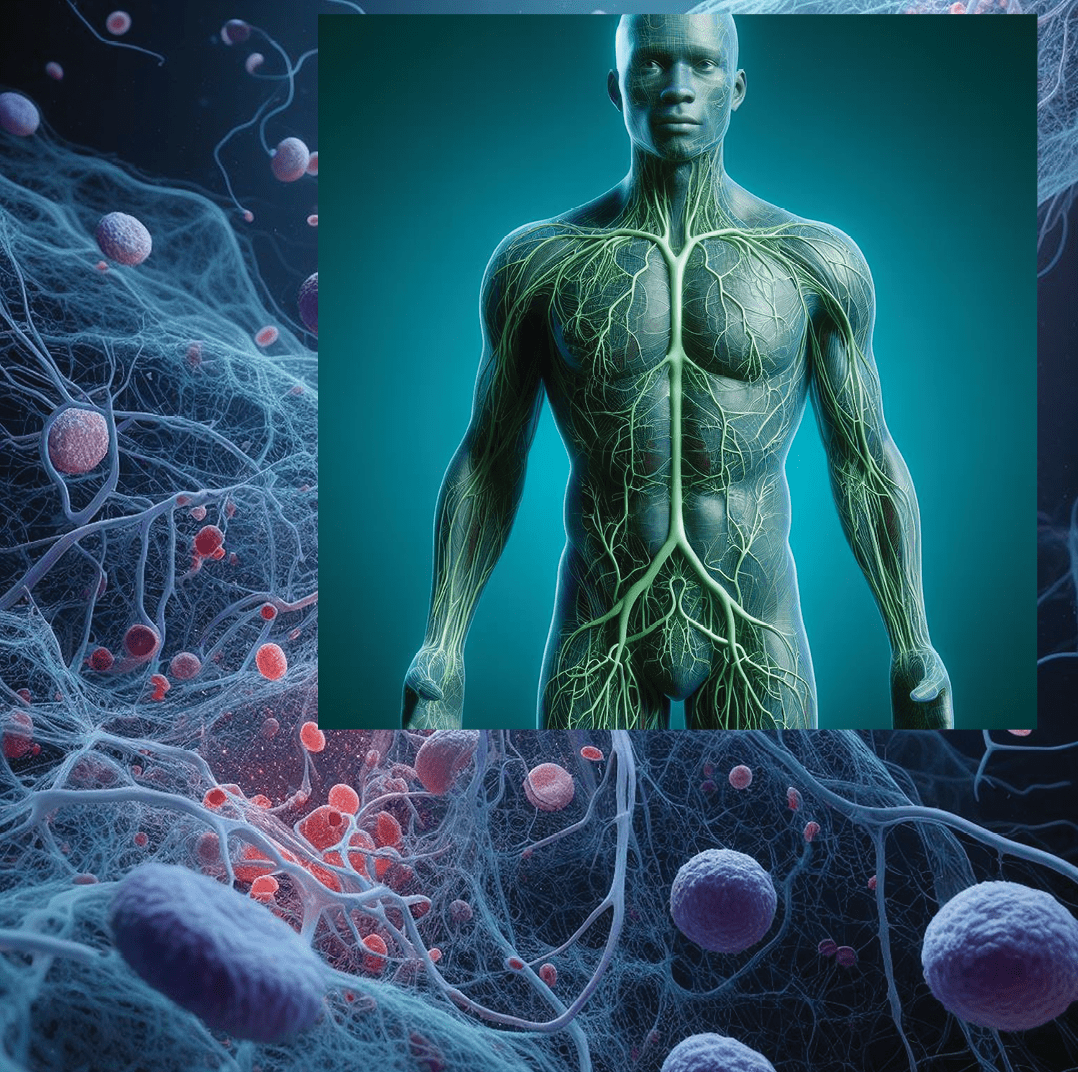
Most people are familiar with the cardiovascular system—the heart, blood, and vessels that keep us alive. But running alongside it is another system just as essential, and far less understood: the lymphatic system.
Unlike the heart-driven blood system, the lymphatic system has no central pump. It relies entirely on movement—your breathing, your muscle contractions, even subtle shifts in posture—to circulate fluid called lymph throughout the body. When that movement is limited, lymph flow can slow. But the idea that the body simply “fills up with its own garbage” is an oversimplification. The reality is more nuanced—and more interesting.
What the Lymphatic System Actually Does
The lymphatic system plays three major roles:
1. Fluid Balance
It collects excess fluid that leaks out of blood vessels and returns it to circulation, preventing swelling (edema).
2. Immune Defense
Lymph nodes act as filtration hubs, where immune cells identify and respond to pathogens like bacteria and viruses.
3. Fat Absorption
Specialized lymph vessels in the intestines (lacteals) absorb dietary fats and transport them into the bloodstream.
This system is vast—made up of lymph vessels, nodes, organs like the spleen and thymus, and immune cells that constantly monitor your internal environment.
Does Lymph “Get Stuck”?
Lymph flow can become sluggish under certain conditions—especially with prolonged inactivity, illness, or damage to lymph vessels (as seen in conditions like lymphedema). When lymph isn’t moving efficiently, symptoms may include:
- Swelling (especially in limbs)
- A feeling of heaviness or tightness
- Reduced flexibility
- Recurrent infections (in more severe cases)
However, many common symptoms like fatigue, stiffness, or general inflammation have multiple possible causes. It’s not accurate to attribute all of them solely to “lymphatic stagnation.”
Why Movement Matters
Movement is critical because the lymphatic system doesn’t have a pump; it depends on:
- Muscle contraction (walking, stretching, exercise)
- Deep breathing (diaphragmatic breathing helps move lymph in the chest)
- Body movement in general
Even simple habits—like regular walking or gentle stretching—can support healthy lymph flow.
Herbs Traditionally Associated with Lymphatic Support
Some herbs have long histories in traditional herbal medicine to assist. These include:
Cleavers (Galium aparine)
Often called a “lymphatic herb” in Western herbalism. Traditionally used to support fluid movement and mild diuretic effects. Some early research suggests immune-modulating properties.
Red Clover (Trifolium pratense)
Used historically as a “blood purifier.” It contains isoflavones and has been studied more for its hormonal effects than for its lymphatic function. Its role in lymph support is largely traditional rather than clinical.
Stillingia Root (Stillingia sylvatica)
Used in 19th-century American herbal medicine. Today, it’s less common due to safety concerns—high doses may be irritating or toxic. Modern evidence is limited.
Prickly Ash Bark (Zanthoxylum americanum)
Traditionally used to stimulate circulation. It increases blood flow and may promote a warming sensation.
Important note: “Used for centuries” doesn’t automatically mean proven effective or safe by modern standards. Herbal remedies can interact with medications or cause side effects, so it’s worth checking with a qualified professional before using them regularly.
Practical Ways to Support Lymphatic Health
If you’re looking for evidence-based ways to support your lymphatic system, these are widely accepted:
- Stay physically active (walking, rebounding, yoga)
- Practice deep breathing
- Stay hydrated
- Manual lymphatic drainage massage (especially helpful in medical conditions like lymphedema)
- Avoid prolonged inactivity (long sitting periods)
The lymphatic system is real, important, and often underappreciated. Movement plays a key role in keeping it functioning well, so consider supporting your lymphatic system through movement, healthy habits, herbs, and gentle self-massage or professional lymphatic massage.