
Have you ever opened your spice cabinet and considered how much history, flavor, and tradition are held in those little jars?
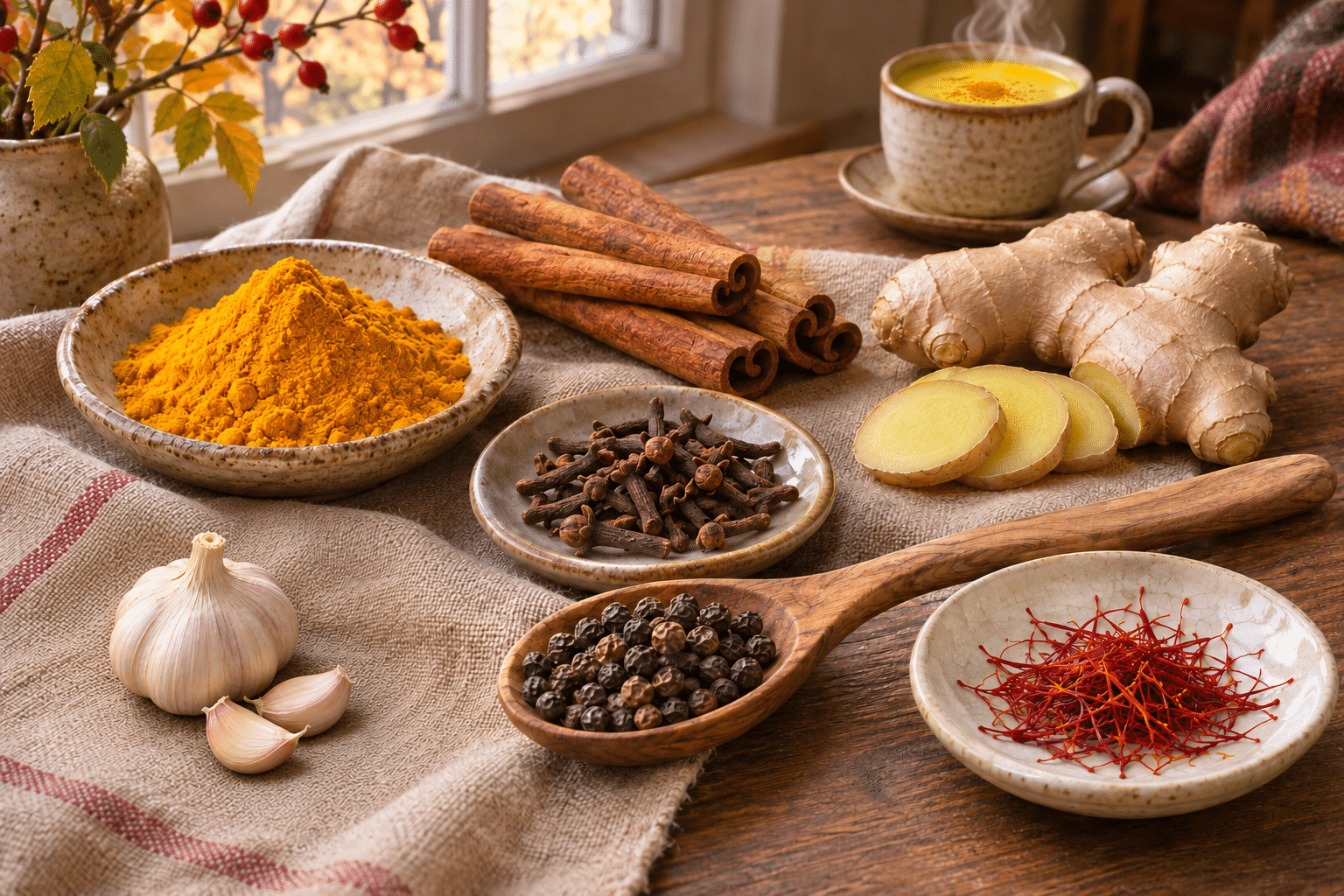
For centuries, people have turned to spices to add richness to their meals and to support their well-being. The golden glow of turmeric, the warmth of ginger, and the sweet aroma of cinnamon can do more than make a recipe interesting. They invite us to slow down and appreciate the gifts nature has placed before us.
Here are seven spices and seasonings to welcome into your kitchen, along with simple ways to enjoy them.
- Turmeric: A Golden Gift
With its bright golden color and earthy flavor, turmeric has been used in cooking and traditional wellness practices for generations. It contains curcumin, a natural compound that researchers have studied for its possible effects on inflammation and joint discomfort.
Some studies have explored whether turmeric preparations may help people with osteoarthritis, but more research is needed to understand how much they help and which preparations may be useful. NCCIH
Try it: Add a small sprinkle to soups, rice, lentils, roasted vegetables, or scrambled eggs. You can also stir a little into warm milk with cinnamon for a comforting golden drink.
- Cinnamon: Sweetness and Comfort
Few scents are as welcoming as cinnamon. It brings a feeling of warmth and comfort to everything from baked apples to a morning bowl of oatmeal.
The video discusses cinnamon in relation to blood sugar. Researchers have studied that possibility, but the evidence does not clearly support using cinnamon to treat a health condition. Enjoying it as part of a nourishing meal is a lovely place to begin. NCCIH
Try it: Sprinkle cinnamon over oatmeal, yogurt, sliced apples, baked sweet potatoes, or your morning coffee.
- Ginger: A Warming Root
Ginger has a lively, warming flavor and a long history of use for digestive discomfort. Many people enjoy ginger tea when their stomach feels unsettled or simply when they want a soothing, fragrant drink.
Fresh ginger can be peeled and sliced, grated into a meal, or steeped in hot water. Ground ginger is also easy to keep on hand.
Try it: Steep a few slices of fresh ginger in hot water, then add lemon or a little honey if you like. Ginger is also delicious in soups, stir-fries, and homemade salad dressings.
- Cloves: Small but Memorable
Cloves may be tiny, but their flavor is unmistakable. They contain eugenol, a natural compound responsible for much of their aroma. In laboratory research, eugenol has shown antioxidant activity, though that does not mean eating cloves has been proven to produce a specific health benefit. pubmed.ncbi.nlm.nih.gov
Cloves have a long history of use in oral care and have been used in dental preparations for temporary discomfort. A persistent toothache, however, needs a dentist’s attention.
Try it: Add a pinch of ground cloves to applesauce, pumpkin dishes, or muffins. You can also simmer a few whole cloves in cider or tea and remove them before drinking.
- Garlic: A Beloved Kitchen Companion
Garlic has found its way into kitchens around the world, and for good reason. Its savory flavor can transform a simple pot of vegetables, beans, or soup into a satisfying meal.
Garlic has also been studied for heart health. Some evidence suggests that garlic supplements may modestly lower blood pressure in people who have high blood pressure, but the research does not mean a clove of garlic can replace prescribed treatment. NCCIH
Try it: Add chopped garlic to roasted vegetables, soups, sauces, or olive oil for dipping bread. For a milder, sweeter flavor, roast a whole garlic bulb until soft.
- Black Pepper: A Familiar Finishing Touch
Black pepper may seem ordinary because it is so familiar, but its sharp flavor can bring an entire dish to life. It contains a compound called piperine, which contributes to its pungency and has been studied for its ability to affect the absorption of certain substances.
The video also makes claims about black pepper and brain function. Those claims need more evidence, but pepper remains a wonderful way to add flavor to wholesome foods.
Try it: Grind a little black pepper over vegetables, eggs, soups, or a dish seasoned with turmeric.
- Saffron: A Touch of Sunshine
Saffron’s beautiful reddish threads bring a golden color and delicate flavor to food. Because the threads are harvested by hand from flowers, saffron can be expensive, but only a small amount is needed to flavor a dish.
Researchers have explored whether saffron extracts may help with mood. Some findings are promising, but more research is needed, and studies of concentrated extracts do not tell us what a few threads in a meal will do. PubMed
Try it: Steep a few saffron threads in warm water and add them to rice, soup, or a vegetable dish.
A Little Flavor, A Little Care
You don’t have to use all seven spices at once or follow a complicated routine. Begin with one that appeals to you. Add ginger to your tea, cinnamon to your breakfast, or garlic to your vegetables. Notice the aroma, taste, and pleasure it brings to your day.
Spices can be a delightful part of a varied, nourishing diet. If you are considering concentrated supplements or essential oils, check with your healthcare professional first—particularly if you take medications. For example, garlic supplements can increase bleeding risk, and concentrated clove oil can be harmful if swallowed. NCCIH
Nature offers us an abundance of flavors, colors, and fragrances. Sometimes the smallest additions to a meal can remind us that caring for body, mind, and spirit can also be a source of pleasure.