
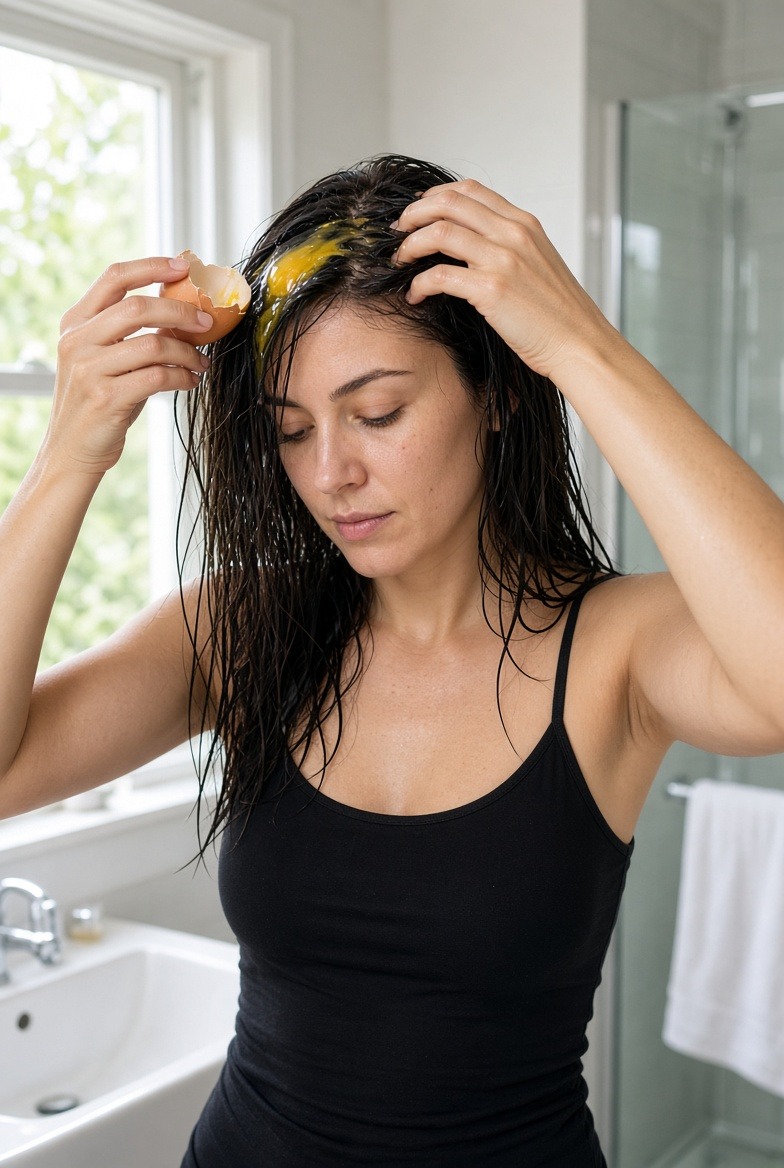
Long before sulfate-free bottles and keratin serums lined drugstore shelves, people washed hair with what they already had in the kitchen. Egg yolks were among the oldest of those remedies. Writers called yolk a hair strengthener as early as the 11th century, and grandmothers kept using it because it was cheap, simple, and left dry hair softer than soap.
Modern shampoos strip oil, foam on command, and last two years on a shelf. They work. They also often contain detergents, silicones, synthetic fragrance, and preservatives. An egg yolk is none of those things: fat, protein, and a dense packet of the nutrients hair is made of. Used correctly, it is one of the cheapest conditioning treatments you can make.
What is actually in a yolk
A chicken egg yolk is roughly a quarter fat and a sixth protein, plus biotin, vitamins A, D, and E, iron, zinc, selenium, and sulfur. The fat includes lecithin, an emulsifier used in commercial conditioners because it coats and softens hair. Proteins can temporarily fill rough spots on damaged cuticles. Sulfur is a building block of keratin. Biotin supports keratin production when you eat it; little of it likely crosses the scalp from a raw yolk.
That distinction matters. Eating eggs is a well-supported way to get hair-relevant nutrients. Rubbing a raw yolk on your head is a folk practice with a plausible mechanism and thin clinical evidence.
Treat yolk as a conditioner and shine treatment first, and as a “hair growth miracle” last.
What people actually notice
The most consistent reports are tactile, not dramatic:
Dry, dull, or chemically treated hair often feels softer and looks shinier after a yolk rinse.
Lecithin and fats act like a light leave-in oil that rinses mostly clean.
Fine hair can look a little fuller because protein coats the shaft.
The effect typically lasts a day or two, not a week.
It is not a strong cleanser. If your scalp is oily or you have buildup, yolk alone will not replace shampoo. Many people use it as a weekly mask after a gentle wash, or mix a yolk into a mild, unscented cleanser.
How to do it without cooking breakfast in your hair
Hot water is the enemy. Egg protein coagulates. Rinse with cool or lukewarm water only.
Basic yolk wash (dry or normal hair)
Separate 1 yolk for short hair, 2 for long or thick hair. Save the whites for cooking.
Beat the yolk until smooth. Optional: 1 teaspoon olive oil or honey for extra dryness, or a squeeze of lemon if you dislike the smell.
Wet hair with cool water.
Massage the yolk into the scalp and through the lengths.
Leave 5–20 minutes under a shower cap for a mask; 1–3 minutes is enough as a wash.
Rinse thoroughly with cool water. Comb gently while rinsing so nothing clumps.
If any film remains, follow with a very small amount of gentle shampoo, then cool rinse again.
Oily scalp version: Use more white than yolk, or yolk plus a teaspoon of apple-cider vinegar in the final rinse.
Frequency: Once a week is plenty. Daily protein treatments can make hair stiff and brittle.
Safety, which is not optional
Allergy. Egg is a common allergen. Patch-test behind the ear first. Skip this if you have a known egg allergy.
Salmonella. Risk from a typical grocery egg is low (about 1 in 20,000), but not zero. Use fresh, refrigerated eggs, wash your hands, keep raw egg off your face and eyes, and avoid cracked or dirty eggs. Pasteurized eggs lower the risk further. Immunocompromised people, pregnant people, and young children should be extra cautious.
Residue. Incomplete rinsing leaves a film and a smell. Cool water and patience fix most of that.
It is not medicine. Sudden shedding, bald patches, or scalp disease need a doctor. A yolk will not treat androgenetic alopecia or infection.
Kitchen versus chemistry
Commercial shampoos win on convenience, preservation, consistent foam, and targeted actives (caffeine, ketoconazole, minoxidil and the like have more human data than raw egg). They lose on cost, ingredient simplicity, and knowing everything that touched your scalp.
Egg yolk wins on price (pennies), accessibility, and a fatty, protein-rich profile many dry heads like. It loses on hygiene, smell, mess, and evidence for growth claims.
Healthy-looking hair is mostly genetics, hormones, diet, heat damage, and how roughly you treat it. An egg will not rewrite those. It can, for almost no money, make dry hair feel like hair again. That is enough reason it lasted a thousand years.
The Guide